Govt picks Chinese, Korean e-buses in big EV push
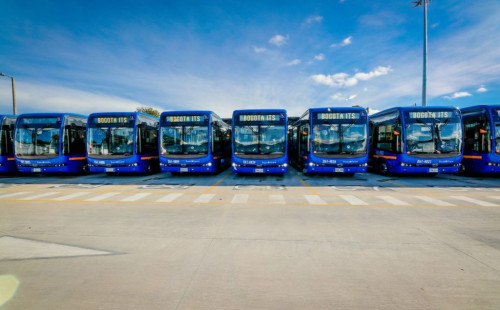
As part of its plan to modernise urban public transport and
reduce emissions, the government is preparing to procure 800 electric buses
from South Korea and China at an estimated cost of Tk4,584 crore.
The Bangladesh Road Transport
Corporation (BRTC) has submitted two preliminary project proposals to the
Planning Commission, targeting completion by June 2029.
One project proposes procuring 300
single-decker electric buses with South Korean financing, while the other seeks
to purchase 500 similar buses with Chinese loans.
According to the proposals, each
electric bus from South Korea is estimated to cost Tk4.61 crore, about 1.8
times the proposed price of a Chinese bus. BRTC has proposed purchasing each of
the 500 buses from China for Tk2.46 crore.
Mohammed Ziaul Haque, secretary of the Road Transport and Highways Division
(RHD), said the government has initiated plans to procure around 1,400 e-buses.
Of these, 500 would be from China, 300 from South Korea, and another 400 under
a World Bank-funded project.
Meanwhile, the Cabinet Committee on
Government Purchase on Thursday approved proposals to procure 200 electric
buses – 100 designated for women passengers.
Transport experts have welcomed the
shift towards a cleaner public transport plan. But they question whether the
BRTC has the institutional capacity to operate and maintain such a specialised
fleet.
The concerns stem from BRTC's
record of inefficiently operating high-end fleets, including Swedish Volvo and
South Korea's Daewoo buses. Many of those buses fell into disrepair and failed
to reach their normal commercial lifespan.
Experts said the government should also encourage greater private-sector participation
in electric bus services rather than relying solely on BRTC.
Md Hadiuzzaman, a civil engineering
professor at Buet, said introducing electric buses is not simply a matter of
buying vehicles; it requires an entirely different operating ecosystem.
He said success would depend on
developing the necessary supporting infrastructure, including charging
stations, specialised maintenance facilities and trained manpower, as well as
integrating electric buses with the existing transport system.
However, BRTC officials said the
corporation will develop the infrastructure needed to operate the electric bus,
including charging stations, depots and maintenance facilities.
The project proposals also include
schemes for dedicated funding for charging infrastructure, maintenance
equipment and other supporting facilities required to establish a complete
electric bus ecosystem.
Korean buses
According to the Project
Development Proposal, the project to procure 300 single-decker electric AC
buses for BRTC will be financed by South Korea. Of the estimated Tk2,713.19
crore cost, Tk1,383.75 crore is allocated for buses, averaging Tk4.61 crore
each.
The project also includes spare
parts worth 15% of bus procurement costs, 25 charging stations, 25 generators
and transformers, 20 workshop sheds, three warehouses, 25 wreckers and 20
automatic washing plants. A video monitoring system and vehicle tracking
software (VTS) are also included, with Tk4 crore allocated for training.
Korean loans under the Economic
Development Cooperation Fund (EDCF) generally carry interest rates of
0.01-0.05%, repayment periods of 30-40 years, grace periods of 10-15 years and
a service charge of around 0.1%.
Chinese buses
The project to procure 500 buses
with Chinese financing has an estimated cost of Tk1,870.51 crore, including
Tk1,230 crore for bus procurement. It provides spare parts worth 10% of bus
procurement costs and 25 charging stations, each with four 320-kilowatt
chargers. Although it has only one workshop, Tk135.30 crore has been allocated
for it.
Chinese financing generally carries
less favourable terms. China's preferential buyers' credit previously carried
interest rates of around 2%, but Bangladesh has taken such loans at rates as
high as 3% in recent years.
Why price Korean buses cost more
BRTC officials said the South
Korean-funded proposal sets a higher unit price for each bus and includes a
larger number of infrastructure items, such as washing plants and
wreckers.
By contrast, the Chinese proposal
involves a much larger number of buses, but the unit price is nearly half that
of the Korean proposal and places greater emphasis on advanced fast-charging
technology.
They said the buses would operate
in major cities, including Dhaka and Chattogram.
Planning officials said proposals
for both projects had been sent to the commission for in-principle approval.
The South Korean-funded project has already received such approval. The project
proposal was sent to the ERD last week to approach the development partner for
financing.
Meanwhile, State Minister for
Planning Zonayed Abdur Rahim Saki ordered further scrutiny of the
Chinese-funded proposal as part of an in-principle approval process.
BRTC officials said both projects
are planned under EDCF and Chinese loans, although financing from the ADB,
World Bank and AIIB could also be considered.
'Prior preparation essential before launching e-bus
service'
Prof Hadiuzzaman said the shift to
electric buses requires careful preparation, including assessing their compatibility
with existing traffic conditions. Road disorder and waterlogging could pose
major operational challenges.
He said electric buses use
fundamentally different technology and require specialised training, equipment
and safety measures, including personal protective equipment.
He added that even developed
countries have expanded electric-vehicle use gradually, with market penetration
at around 18% in Europe and 5% in the US. This highlights the difficulty of
making a rapid transition without adequate preparation, he said.
'BRTC shouldn't be the main platform'
Shamsul Hoque, also a civil
engineering professor at Buet, said BRTC should not be the main platform for
the government's plan to sustainably electrify public transport.
"BRTC has previously imported
buses, but most of those fleets failed to reach their lifespan. Buses imported
from India did not last, and neither did those from South Korea," he said.
He said the core problem is that
BRTC often leases out buses instead of maintaining them effectively. As a
result, the focus shifts from service to competing for passengers.
"In many cases, BRTC operates
worse than private operators," he said. "Simply buying buses will not
be enough. There is no integrated plan covering where depots will be located,
where buses will be safely parked and how they will be maintained and
repaired."
He said that before assigning
another project to BRTC, the government should conduct a comprehensive process
audit and assess the performance of previous projects. "It needs to
examine how the services performed, what went wrong and why the buses failed to
last."
Instead, the government should
provide policy support to private operators, he said. "They will have a
stronger incentive to maintain them and ensure better service because they will
want to protect their own investment."
Is BRTC prepared?
In 2002, BRTC procured 50
double-decker Volvo buses at Tk1.26 crore each. However, the high-comfort buses
were reduced to scrap within six to seven years.
In 2011, BRTC received 255 Daewoo
buses, more than 100 of which became inoperable within seven years. BRTC
eventually withdrew its AC service between Dhaka and Narayanganj, while private
operators expanded their AC fleets to meet growing demand.
However, BRTC in its latest annual
report said improved financial discipline and governance had turned it into a
profitable entity capable of covering its costs from its own earnings.
It said the integrated workshop in
Gazipur had been reopened with modern equipment and other workshops upgraded,
helping extend vehicle lifespans and facilitate vehicle assembly.
BRTC officials said the state-owned
operator currently has around 1,250 buses, about 700 of which are old. Without
new procurement, the operational fleet could shrink to around 550 by 2026,
potentially worsening the public transport shortage.
Md Abu Bakar Siddique, deputy
general manager (planning) at BRTC, said a feasibility detailed study by Buet
is under way to determine the number and locations of charging stations,
workshops, and other facilities.
"The charging stations, depots
and maintenance facilities could be developed anywhere in the country, based on
the findings of the feasibility study," Siddique said.
RHD Secretary Ziaul Haque said bus
procurement would also be phased, with the first 100 buses planned in two
batches of 50 by December.
"The business model for
electric buses will also be different from BRTC's existing models so that this
initiative does not meet the fate of the Volvo and articulated bus
projects," he said.
Private sector to be engaged
RHD officials said the government
is encouraging private operators to shift to electric buses as part of a
gradual reduction in fossil-fuel-powered vehicles.
Companies such as Akij and PRAN
have already expressed interest in introducing electric buses and are working
on the issue, they said.
The secretary said the government
has held several meetings with private-sector companies. Private bus operators
have called for further tax cuts and access to financing. He said the issue
would be discussed at an inter-ministerial meeting soon.