Yemen teeters towards renewed war in shadow of Iran conflict
Highlights:
- Houthis targeted a Saudi airport, imposed a naval blockade
- Houthis say they responded to a Saudi attack on an airport
- UN special envoy seeks de-escalation, greater stability
- He says recent events are going in the opposite direction
- Pessimism grows over prospects for a negotiated resolution
Yemen is edging towards the resumption of a more than
decade-old frozen conflict, Yemeni officials, Western diplomats and analysts
say, as attacks on Saudi infrastructure and shipping by Iran-aligned Houthis
test the patience of the kingdom and the Yemeni government forces it backs.
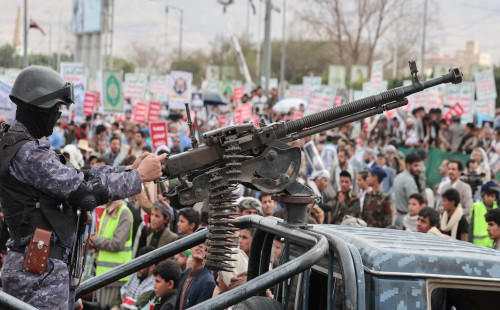
Houthi and Yemeni government forces
have in recent days built up along a front line spanning the Houthi-controlled
northwest of Yemen, running from the Red Sea coast to the Saudi border, Yemeni
military officials and analysts said.
Mediation efforts led by the United Nations and Oman, and recently also
involving Pakistan, have continued, but a Western diplomat said pessimism was
growing about the prospects for a negotiated resolution.
Saudi Arabia has sought to avoid
renewed conflict in Yemen since it struck a ceasefire with the Houthis in 2022,
pausing a war that killed hundreds of thousands of people through fighting and
famine and drew international outcry.
But the Houthi targeting of a Saudi
airport last week and the announcement of a naval blockade of the kingdom —
enforced with two attacks on Saudi tankers which the Houthis said they carried
out — may be changing that calculus, the diplomats, analysts and Yemeni
officials said.
The Houthis said the airport attack
responded to a Saudi attack on an airport under their control and that the
naval blockade was a response to a Saudi siege on Yemen, which Saudi Arabia has
denied.
"Since 2022, these are the most serious preparations for a conflict I've
seen," said Baraa Shiban, a Yemeni analyst and associate fellow at the
Royal United Services Institute think tank in Britain.
The Saudi government media office,
Yemen's information minister and a Houthi spokesperson did not respond to
requests for comment.
US President Donald Trump said on
Thursday he would hold Iran accountable for any Houthi attacks.
In a statement to Reuters, UN
special envoy for Yemen Hans Grundberg said he had just returned from two trips
to Gulf state Oman, with a trip to Saudi Arabia in between, "to discuss a
way forward towards de-escalation and greater stability."
"Recent events have taken
Yemen in the opposite direction, and that is a setback for Yemenis above all.
My efforts continue, and the United Nations always stands ready to support the
parties in reversing course and putting the interests of Yemenis first."
Iran and Houthis pile on pressure
Tensions are deepening in Yemen two
weeks after the collapse of an interim truce meant to end the Iran war.
That war has all but shattered a
2023 detente between Saudi Arabia and Iran that had calmed regional tensions
and allowed Saudi Crown Prince Mohammed bin Salman to focus on his Vision 2030
transformation plan, which includes huge infrastructure projects and the
hosting of global events.
The Houthis have largely stayed on
the sidelines of the Iran war but analysts, diplomats and Yemeni officials said
the group and its Iranian backers now see an opening to pile pressure on both
Saudi Arabia and the US.
The naval blockade on Saudi
shipping could affect millions of barrels of oil a day pumped by pipeline to
Saudi Arabia's Red Sea coast, a route used to skirt Iran's near-total blockade
of the Strait of Hormuz.
For the Houthis, the escalation
could also aim to extract financial and political concessions from Riyadh and
Iran-style leverage over a global chokepoint by extending their reach over the
strait known as Bab al-Mandeb, Shiban said.
A senior Houthi official said Bab
al-Mandeb, which controls access from the Red Sea to the Indian Ocean, remained
open to non-Saudi shipping.
Saudi frustration builds with Houthis
The recent tensions fly in the face
of years of Saudi engagement with the Houthis that awarded them concessions
including use of Hodeidah port and the 2024 reversal of plans to block all
international banking access in areas they control.
"There is increasingly a
feeling that peace with the Houthis is unattainable, and that a delayed war
might prove costlier still, especially with Saudi Arabia set to host Expo 2030
and the (soccer) World Cup in 2034," said Farea al-Muslimi, a research
fellow at the Chatham House think tank's Middle East and North Africa
programme.
"It's risky, but it could help
clear the way," he said, adding that US support would be critical.
The political landscape has shifted
in Saudi Arabia's favour since it first intervened in 2015 at the head of an
Arab coalition, when the killing of thousands of civilians in bombing raids
drew US and European pressure on Riyadh to end the war.
Houthi attacks on Israel and
international shipping since the 7 October 2023 attack on Israel by the
Palestinian militant group Hamas, along with the detention of dozens of UN
staff, have hardened international opinion against the Houthi movement,
analysts and Yemeni government officials said — a shift they say works in Saudi
Arabia's favour.
Should Riyadh intervene again,
"there will be much, much less scrutiny," said Shiban.