Ctg Chamber urges BB to reject proposed hike in banking fees
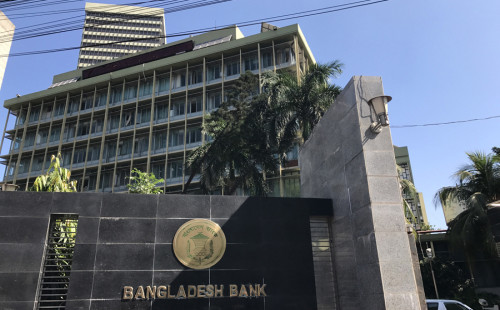
The Chittagong Chamber
of Commerce and Industry (CCCI) has urged Bangladesh Bank Governor Mostaqur
Rahman not to approve a proposal by commercial banks to introduce new fees and
increase existing charges on a range of banking services, warning that the move
would raise the cost of doing business and slow private sector investment.
In an urgent letter sent
to the governor today (15 July), CCCI President Mohammed Amirul Haque expressed
concern over recent media reports that the Association of Bankers Bangladesh
Limited (ABB) had sought the central bank's approval to impose new fees and
revise charges across 14 banking services, according to a press release.
The chamber president
said the business community believes such proposals would shift unnecessary
costs onto businesses and ordinary customers while serving primarily to
increase banks' profits.
"At a time when the
government is working to stimulate private sector investment and restore
momentum to the economy, imposing additional banking charges would create new
obstacles to economic recovery," the letter said.
The chamber noted that
several recent policy measures taken by Bangladesh Bank had been welcomed by
the business community for helping reduce the cost of doing business.
These include the
Tk60,000 crore special incentive package, temporary relaxation of the single
borrower and large loan exposure policy, allowing direct imports without
letters of credit in certain cases, and capping banks' interest rate spread at
4%.
According to the
chamber, introducing new banking charges would effectively offset the benefits
of those reforms.
"The reduction in
lending spreads will bring little benefit if businesses are simultaneously
required to bear higher banking fees and service charges," the letter
said.
The chamber warned that
higher banking costs could discourage new investment, reduce private sector
credit growth, weaken overall economic activity and eventually contribute to
higher consumer prices.
According to the
proposal cited in the letter, ABB has recommended introducing or increasing
charges on a wide range of banking services, including Tk100 for submitting an
import letter of credit (LC) application, $20 for processing foreign LCs,
Tk1,000 for processing local LCs, Tk1,000 for LC authentication, Tk500 for
cancelling active LCs and Tk300 for balance confirmation.
The proposal also
includes increasing loan processing fees to 2%, charging 1% for loan
rescheduling, raising early loan settlement fees to 2%, imposing a 1% fee on
buyers' credit management, introducing a 1% charge on corporate loan and trade
finance deal structuring, and levying an additional 1% risk premium.
The chamber argued that
these charges would significantly increase financing costs for businesses,
particularly importers and manufacturers already facing higher operating
expenses.
The CCCI also opposed
proposals to introduce charges on cash withdrawals from bank accounts. Under
the reported proposal, customers would pay Tk100 for each cash withdrawal from
the fourth to the tenth transaction in a month, while each subsequent
withdrawal would cost Tk300.
The chamber further
objected to a proposal to reduce the minimum average balance required for free
savings accounts to Tk5,000 and to impose a Tk300 charge on accounts
maintaining balances above Tk25,000 under specified conditions.
According to the letter,
one of the most concerning aspects of ABB's proposal is a recommendation
allowing banks to increase these charges by up to 10% annually, citing higher
operating costs, technology investments and inflation.
"If implemented,
such a provision would discourage savings among small businesses and ordinary
depositors, weaken public confidence in the banking system and undermine the
government's vision of building a cashless and digital economy," the
chamber said.
The business body said
the economy remains at a critical stage, with the government seeking to
encourage investment and restore business confidence. In such circumstances,
any move that unnecessarily increases the cost of doing business would be
counterproductive and could hinder broader macroeconomic stability.
The chamber urged Bangladesh
Bank to reject the proposed fee structure in the interest of businesses,
consumers and the overall economy.