Dhaka Bank managing director eyes SME, retail lending through digital transformation
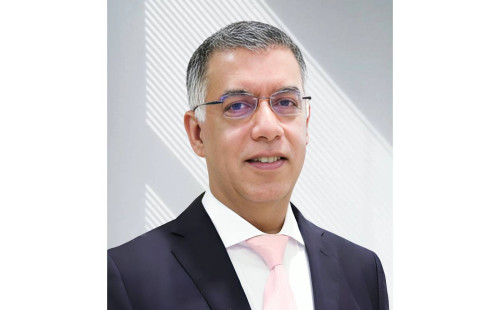
As Dhaka Bank marks its 31st anniversary, Managing Director
Osman Ershad Faiz says the bank is repositioning itself from an institution
focused on corporate lending to a technology-driven, inclusive bank with a
stronger emphasis on SME and retail lending.
In
an interview with The Business Standard staff correspondent Sakhawat
Prince, he outlined the
bank's strategic priorities, digital transformation agenda, and outlook for
Bangladesh's banking sector.
What is your vision for Dhaka
Bank over the next three years?
Our goal is to transform Dhaka Bank into one of the country's leading private
banks by improving return on equity, credit quality, capital efficiency and
customer experience while maintaining the highest standards of governance and
transparency.
We
believe the future of banking lies not only in large corporate lending but also
in SMEs and retail banking, which are key drivers of Bangladesh's economy.
Through
technology, sound governance and customer-focused services, we aim to build a
modern, sustainable and inclusive financial institution that Bangladesh can be
proud of.
How is digital transformation
changing the customer experience?
We see digital transformation as a continuous process rather than a one-time
initiative. Our e-Rin platform already enables instant credit decisions and
loan disbursement within minutes without human intervention.
We
are also using artificial intelligence and machine learning to assess borrowers
using alternative data such as mobile usage patterns, transaction history, and
cash flow, allowing us to reach customers who are often excluded by traditional
credit assessment methods.
We
are strengthening our IT capabilities while expanding partnerships with fintech
companies, telecom operators, and mobile financial service providers.
Digital
lending, mobile app-based banking, and digital onboarding are central to our
strategy to make banking more accessible and to bring financially excluded
people into the formal financial system.
You have said the bank has
significant "headroom" for growth. What does that mean?
Headroom
refers to the gap between our current performance and that of the country's
top-performing private banks.
Our
return on equity increased from 5.71% to 11.62% in 2025, but leading banks
continue to generate stronger returns with similar levels of capital.
We
already have a strong asset base and network. The next step is to improve
revenue mix through higher-margin businesses while increasing operational
efficiency.
How are you maintaining credit
quality during a challenging period for the banking sector?
Credit
discipline remains one of our top priorities. Our credit approval process is
fully independent of relationship management and board influence. We also have
specialized recovery teams managing different stages of loan delinquency.
In
2025, we voluntarily adopted stricter loan classification standards ahead of
regulatory requirements to ensure our balance sheet reflects the true financial
health of the bank.
What are your main strategic
priorities?
First,
we aim to preserve our credit culture during a period of sector-wide stress. We
reduced classified loans by 27% in 2025 and will continue to be selective in
lending.
Second,
we are integrating our digital and physical banking channels to deliver a seamless
customer experience.
Third,
we are building a stronger leadership pipeline with greater accountability.
Finally,
we remain committed to complete transparency in our communication with
regulators and stakeholders.
How do you assess the
non-performing loan situation in Bangladesh?
The
NPL crisis is one of the banking sector's most critical challenges. The
industry's NPL ratio reached 35.73% in September 2025, among the highest
globally.
Addressing
this requires structural reforms, including the adoption of IFRS 9 Expected
Credit Loss models, the establishment of a dedicated Asset Management Company
for NPL resolution, stronger central bank independence, and full
interoperability across mobile financial services.
Why is the bank placing greater
emphasis on women-led enterprises?
This
is driven by commercial logic rather than social responsibility alone. Many
women entrepreneurs remain outside the formal credit system because they lack
traditional collateral.
By
assessing repayment capacity through cash flow and transaction behavior instead
of property ownership, we have identified a customer segment with strong
repayment performance. This significantly expands our addressable market,
particularly in sectors such as agricultural processing and garments.
Which sectors will drive
Bangladesh's next phase of growth?
We
see three key sectors.
The
pharmaceutical sector continues to grow strongly while competing on quality.
Information technology benefits from Bangladesh's young and digitally skilled
workforce. Renewable energy will play an increasingly important role in
ensuring energy security.
These
industries are resilient because they are less dependent on trade preferences
as Bangladesh prepares for LDC graduation.
How do you view competition from
fintechs and digital financial service providers?
We
see fintechs as both competitors and partners. Our approach is based on
partnership in distribution and competition in credit.
Fintechs
are strong in customer experience and high-frequency transactions, while banks
retain advantages in credit assessment and balance sheet strength.
We
are building partnerships with platforms such as bKash and Nagad to expand our
reach while maintaining our expertise in credit risk management.
The
interoperability introduced through the NPSB framework has significantly
improved connectivity between MFS providers and banks.
We
are also investing in AI-driven credit assessment to strengthen our position in
these markets. Ultimately, success will come from integrating the strengths of
both banking and fintech models.
How does AI support SME lending?
AI
and machine learning are transforming SME lending by shifting from
collateral-based decisions to data-driven assessments.
We
analyse alternative data such as mobile financial service transaction
histories, trade payables, and mobile usage patterns to evaluate
creditworthiness, enabling us to serve borrowers with limited formal credit
histories, particularly women-led businesses.
Our
e-Rin platform demonstrates this approach by enabling automated assessment and
disbursement without human intervention.
One
of our strategic goals is to reduce SME loan processing time from several days
to less than one hour.
AI
also enables sector-specific risk analysis, including for IT businesses, by
evaluating contracts and intellectual property alongside conventional financial
data. This allows us to expand SME lending while maintaining strong credit
quality.
What prompted your return to
Bangladesh after three decades in international banking?
My
return was driven by the visible gap between the potential of Bangladesh's
private banking sector and its current performance.
Having
spent decades building banking operations across Asia, I saw that the timing
was right for structural reform in Bangladesh's financial sector.
What
specifically attracted me to Dhaka Bank was its strong credit discipline. In
2025, the bank maintained an NPL ratio of 3.77%, significantly better than the
industry average of 35.73%.
This
reflects institutional discipline that I wanted to build upon. On a personal
level, contributing to Bangladesh's economic transformation and playing a role
in the development of its financial sector was a responsibility I was not
prepared to turn down.