Chicken market hit by supply crunch, big jump in Sonali prices
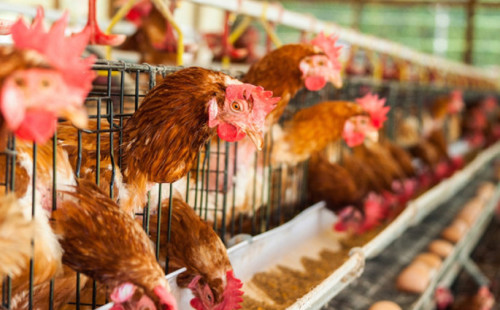
A day before Eid, sonali chicken was
sold at Tk340-370 per kg in the capital's markets, but it is currently being
sold at a raised price of Tk380-400.
While the price of sonali chicken was Tk270-320 in the
first half of Ramadan, buyers are now having to pay about Tk80-110 more per kg.
On Wednesday (1 April), this information was gathered
from Karwan Bazar, Hatirpul Kachan Bazar, and New Market speaking with vendors
and consumers.
At a poultry shop in Hatirpul, we spoke
to Shahid Mia, who said that it is tolerable that the prices will be a
little on the higher side during Eid. The price of sonali chicken was Tk360 per
kg 3-4 days before Eid. Now that guests are coming after Eid, the price has
risen to Tk400. Sellers increase the price whenever they find an occasion or
excuse.
Broiler chicken is currently sold at Tk200 to 220. Prior
to Eid, the price of broiler chicken rose to 230-240 taka. Even though the
price has slightly decreased, broiler chicken was sold for Tk150-160 right
before the start of Ramadan. Accordingly, the current price of broiler chicken
is Tk50-60 higher per kg.
A week ago, the price of layer chicken was Tk320 per
kilogram, but it is now Tk350. Depending on size, the cost of local variety
chicken has gone up by 50 taka per kilogram, from Tk600 to 750.
Mozammel Islam, owner of the Mayer Dowa Chicken House in
Hatirpool, told TBS, "The demand for chicken has increased after Eid. The
supply of chicken has decreased because the production on the farm is currently
low. Due to the impact of the war, the price of fuel has increased, resulting
in an escalation of transportation cost, eventually increasing the price of all
sorts of poultry."
Md. Sumon Hawlader, President of the Bangladesh Poultry Association (BPA), an
organisation advocating for marginalised farmers, told TBS that farmers have
not received fair prices for eggs and chickens for the last seven months,
forcing many to shut down after heavy losses. He alleged the resulting
production downfall is an artificial crisis driven by large corporate companies.
Regarding rising feed prices, Mr. Hawlader said,
"Despite decline in global raw material costs, feed prices here rose by
Tk2–3 per kg in recent days without justification. Farmers are being punished
under the pretext of war. If the government does not fix the prices now, the
market will be hostage to 4–5 big companies."
He added, "This mafia group aims to turn marginal
farmers into 'servants'. As farms close, companies push 'contract farming',
making farmers subservient on their own land. We cannot allow corporations to
control the market while farmers' produce. Without immediate government action,
a more severe crisis awaits the poultry sector."