AI, Cardiac MRI take centre stage at heart failure conference, pre-workshop in Dhaka
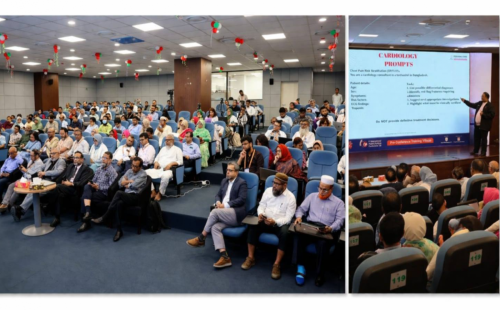
A pre-conference workshop of the First
International Heart Failure Conference 2026 was held yesterday (30 March) at
the Super Specialized Hospital of Bangladesh Medical University (BMU), focusing
on the growing role of artificial intelligence (AI), cardiac MRI and advanced
diagnostic techniques in heart failure management.
The workshop, part
of the upcoming international conference in Dhaka, highlighted recent
advancements in AI-based medical management, Cardiac Magnetic Resonance Imaging
(Cardiac MRI) and endomyocardial biopsy.
For the first time
in Bangladesh, participants received hands-on training on AI-driven diagnostics
and modern cardiac imaging technologies.
Experts said AI is transforming
cardiovascular care by enabling early detection, accurate diagnosis and better
risk assessment of heart failure patients. They also described cardiac MRI as
the gold standard for evaluating heart structure and function due to its high
accuracy and non-invasive nature.
The event brought
together local and international cardiologists, who stressed the need to adopt
advanced technologies in Bangladesh's healthcare system. They noted that
combining AI with cardiac imaging could significantly improve diagnosis and
treatment outcomes.
The inaugural
session was addressed by BMU Vice-Chancellor Prof Dr Md Shahinul Alam, while
Prof Dr Mohammad Safiuddin delivered the welcome speech. Malaysian digital
health expert Dr Sultan Kaveri presented on AI-based medical management. Prof
Dr Md Atahar Ali also spoke at the session.
A second session
on cardiac MRI was chaired by Prof Dr Monjur Mahmood, with Associate Professor
Dr Zafar Iqbal Jamali as vice-chair. Panelists included Prof Dr Robert Manka
from Switzerland, along with Bangladeshi experts Dr Dine Mujahid Md Faruk
Osmani and Dr Mohammad Shahidul Haque.
The interactive workshop featured live demonstrations, practical training on
cardiac MRI analysis, AI-assisted imaging interpretation and case-based
discussions on heart failure management. Experts noted that AI can rapidly
analyse large datasets and support clinical decision-making, though further
validation is needed before widespread use.
Speakers also
emphasised the need for infrastructure development, skilled workforce, data
security and regulatory frameworks to implement these technologies effectively.
The workshop
marked a significant step toward technology-driven cardiology in Bangladesh,
with experts hopeful that AI and advanced imaging will improve patient care and
outcomes in the near future.