BNP calls budget pro-people, Jamaat criticises inflation risk and debt dependence
BNP lawmakers have described the proposed budget for fiscal
year 2026-27 as pro-people, investment-friendly and employment-oriented, while
Jamaat-e-Islami members criticised it as debt-dependent, inflation-prone and
lacking reforms during the parliamentary debate.
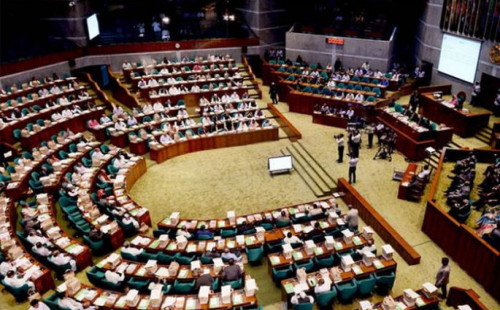
During the general discussion on
the supplementary budget in parliament today (14 June), MPs mainly focused on
the proposed budget, raised local issues and engaged in political exchanges.
BNP lawmaker MA Hannan from
Brahmanbaria-1 said the budget includes initiatives for low-income people,
education, healthcare and social protection, along with new opportunities for
youth, calling it a comprehensive budget.
Gaibandha-4 MP Md Shamin Kaiser said, "Protests over the budget were not
justified, and those presenting a shadow budget have not explained the
implementation methods." He also mentioned voluntary canal excavation
initiatives in Gaibandha.
Chandpur-2 MP Jalal Uddin said the
budget proposes family cards and farmer cards, and that further discussion
could make it more people-friendly.
Khulna-4 MP SK Azizul Baree Helal
said the government inherited challenges such as investment stagnation and a
weak banking sector, and that the budget addresses these issues. He cited
higher development spending, focus on education and jobs, tax and duty cuts to
control inflation, and steps to improve the investment climate.
Azizul also noted the lack of
specific directives on dredging the Rupsha and Bhairab rivers and reviving
closed jute mills, calling for continued jute mill operations even after
privatisation.
Reserved seat MP Rasheda Begum Hira
said, "The budget seeks to ensure the rights of the poor through
redistribution and includes tax cuts on 60 essential commodities, along with
measures for women's rights."
Reserved seat MP Anna Minz
highlighted allocations for ethnic minority communities in the plains and
stressed employment opportunities for them.
MP Mahmuda Habiba expressed
disappointment over the absence of directives to bring non-MPO institutions
under MPO coverage and proposed recruiting five mental health workers in each
union.
MP Farida Yasmin said the budget
reflects public expectations and lays the foundation for a developed
Bangladesh, with focus on education, health, investment, environment,
communication and ICT.
Jamaat-e-Islami MPs raise criticism over different aspects
of budget
Rangpur-6 MP Nurul Amin said,
"The budget may raise prices of essential goods and increase inflationary
pressure, and it lacks a clear investment direction."
"I urge special initiatives
for madrasa education," he added.
Nilphamari-3 MP Obaidullah Salafi
called the budget debt-dependent, saying that despite taxpayers' willingness,
weak administration and dishonest officials have made the system intimidating.
He proposed VAT cuts, wealth tax on
the rich and tax reforms, saying the budget relies on borrowing and wasteful
spending.
Sherpur-1 MP Rashedul Islam said,
"The budget does not reflect the July Charter and allocations for July
movement martyrs and injured are nominal also." He also alleged regional
disparities.
Rajshahi-1 MP Mujibur Rahman said
corruption and waste were not properly addressed and urged the prime minister
to use more restrained language in political remarks.
Nilphamari-4 MP Abdul Muntakim said
district-wise allocations are unclear in the budget and should be made
transparent in the future. He also said the spirit of the July movement was not
reflected in the budget.
Reserved seat MP Marzdia Momtaz
said, "Salary increases were proposed for government employees, but no
such measures were taken for private sector workers."
The supplementary budget for
FY2025-26 is scheduled for passage tomorrow.