Two remanded, eight denied bail for using AI-generated videos of Azhari to sell products
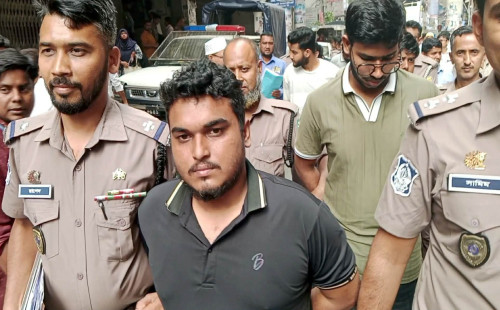
A Dhaka court has placed two individuals on a two-day
remand and denied bail to eight others in a case involving alleged fraud using
AI-generated deepfake videos of Islamic speaker Mizanur Rahman Azhari to
promote and sell aphrodisiac products.
Dhaka Additional Chief Metropolitan
Magistrate Awlad Hossain Muhammad Junaid passed the order today (5 May) after a
hearing.
The court granted remand for Md
Sarafat Hossain, 24 and Md Shafaet Hossain Shuvo, 21, while rejecting both
remand and bail petitions for the remaining eight accused.
Assistant Sub-Inspector Md Mamun Hossain of the Dhaka
Metropolitan Police's Prosecution Division confirmed the matter.
The case was filed under the Cyber
Security Act on 23 April at Paltan Model Police Station by an individual named
Bilal Hossain.
Following this, a joint operation
by police from Paltan Model Police Station and Bayazid Bostami Police Station
in Chattogram led to the arrest of 10 people from the Shershah Colony area on
24 April.
On 25 April, the investigating
officer, Sub-Inspector Samim Hasan of Paltan Police Station, produced the
accused before the court and sought a 10-day remand for each.
The court sent them to jail at the time and fixed today for the remand hearing.
The other accused are Shahadat
Towfik, 21; Md Imam Hossain Bijoy, 21; Md Rafiqul Hasan, 21; Minhajur Rahman
Shahed, 19; Towki Tajwar Ilham, 21; Omid Hasan, 21; Md Abdullah Fahim, 21; and
Md Imran, 24.
Although they are from different
districts, police said the group operated by renting a flat in the Bayazid
Bostami area of Chattogram.
During the hearing, the
investigating officer said the group had been involved in fraud by selling
aphrodisiac medicines both in Bangladesh and abroad.
To gain public trust, they used
images and videos of Azhari. Based on information obtained, fake medicines were
also recovered from the Mohammadpur area.
"The websites, hosting and
domains used by the accused were not created within the country. Posts from
these platforms were made as recently as eight hours ago, and the pages remain
active," he said, seeking remand to identify others involved.
During the proceedings, the court
observed that such medicines could have harmful effects on the human body.
Defence lawyers Mosleh Uddin
Jashim, Sharif Ahmed and others sought bail and cancellation of remand, arguing
that the accused were students from financially disadvantaged backgrounds and
not the main organisers.
"They performed tasks as
instructed. The accused are innocent. We pray for cancellation of their remand
and for bail," one defence lawyer said.
After hearing both sides, the court
granted a two-day remand for Sarafat and Shuvo, while rejecting the remand and
bail applications for the remaining accused.
According to the case statement,
the group had been carrying out digital forgery in a planned manner by
collecting images and voice samples of Mizanur Rahman Azhari from social media.
Using artificial intelligence and
deepfake technology, they allegedly replicated his appearance and voice.
These manipulated videos were then
used to promote an aphrodisiac product named "Eurocin".
Believing the content to be
genuine, customers placed orders. The group allegedly promoted the videos
through more than 24 fake Facebook pages and websites, including "Azhari
Shop", "Doctor Seba" and "Halal Shop", and collected
money by delivering the products through courier services.