Fake Fifa sites are everywhere: How fans can stay safe
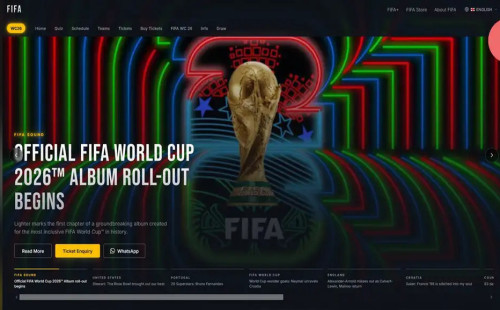
Unbeatable
football stars, historic goals and legendary goalkeepers: The Fifa World Cup
has begun in the US, Mexico and Canada, but the frantic search for tickets
remains. Many fraudsters are trying to scam football fans online.
In May, the US domestic intelligence service,
the Federal Bureau of Investigation (FBI) warned against scams and said it was
issuing a public service announcement "to warn the public that cyber
threat actors are conducting spoofing attacks against the Federation
Internationale de Football Association (Fifa) website in advance of the 2026
Fifa World Cup."
It went on to explain that "a spoofed
website is designed to pose as a legitimate website, with branding, product
listings, etc., and malicious actors use them to further illegal activity like
personal information theft and facilitating monetary scams."
It also listed dozens of suspicious domains that had already been identified
but said that "the public should be aware that new websites will continue
to appear."
DW Fact Check has put together some tips on how
to spot scams.
How do I recognize a fake site?
URLs: Fake websites often have URLS that
resemble those of the original sites with minor differences. For example, the
official domain fifa.com might be altered to filfa.org, fifa-online.com,
fifa-2026.xyz, fifaworldcup26.sale or fifa-com.services.
Legal
notice: In Germany, Austria and Switzerland and
various other countries, websites with commercial or editorial content must
display a legally compliant imprint. Therefore, if a website does not have one,
it suggests it is not a legitimate site.
Fakeshop-Finder: In Germany, you can use
this online tool provided by the Federation of German Consumer Organizations
(VZBZ) to find out whether a site is legit or not. You just need to put in the
URL.
Look up a domain: You can check when a site
was registered at www.whois.com
Fifa tickets at exorbitant prices
According to TicketData, a US platform
that tracks major sports events, FIFA currently has thousands of official
tickets left.
But they are expensive and that is probably the biggest
hurdle for many fans who would like to attend a game. The cheapest tickets for the June 12 match
between the US and
Paraguay was going for $2,000 on June 10, and tickets for Sunday's match between
the Netherlands and Japan cost
$900.
Verified ticket resale sites such as
Seatgeek, StubHub, Vivid and Gametime often offer FIFA tickets at lower prices.
Though FIFA and consumer protection
agencies still advise consumers to only purchase through official FIFA channels
to avoid being scammed, these sites are established ticket marketplaces that
offer refund guarantees. Purchases are legally valid.
The GoalPass
app allows
users to compare ticket prices on the various platforms, both the official FIFA
site as well as those of unofficial resale sites.
On June 11, a ticket for the Germany
versus Ivory Coast game on June 20 was going for $932 on Seatgeek, while it
cost $3,398 and upwards on the FIFA site.
Experts see no contradiction in the fact
that FIFA allows tickets to be sold at significantly lower prices on other
platforms. "The last thing it wants is loads of unoccupied seats - not just for the
optics but also because any empty seat means a value of $0," wrote BBC
football correspondent Dale Johnson.
"The figures show that fans are not
prepared to pay the high prices for tickets for the less desirable games,"
he added. "This suggests Fifa cannot get the high face value on its own
site, leading to the speculation it is trying to sell the tickets elsewhere -
without reducing the prices itself."
This article was originally written
in German.