Shark attack pushes Australian state to review drone curbs
Highlights:
- Major beaches remain closed across Sydney
- Woman in a critical but stable condition - hospital
- Civil aviation regulator will explore adapting rules
Restrictions on drones flying over Australia's Coogee Beach
will be reviewed by a regulator so rescuers in New South Wales state can
monitor for sharks, after an attack on Saturday left a woman critically injured
in hospital.
Emergency services were called to
Coogee Beach in eastern Sydney on Saturday morning following reports that a
35-year-old woman had been bitten by a large shark about 30 metres (100 feet)
from the shore.
The woman was in a critical but stable condition at St Vincent's Hospital on
Sunday, a spokesperson told Reuters, after she sustained serious injuries to
her lower left leg and arms.
Coogee Beach and others in the
city's Randwick Council area were closed for 24 hours following the attack.
Drones flew overhead under emergency provisions to scan for sharks.
"It's been a really tough
summer of shark activity and shark attacks in Sydney and it's something that
the NSW government is taking really, really seriously," said Tara
Moriarty, New South Wales state's minister for agriculture.
Moriarty said the government would
consider fresh measures to keep swimmers safe from shark attacks, including
using drones and other technology.
Australian lifesavers use drones to
help watch for sharks, but Coogee Beach has had restrictions covering
commercial drone use because it sits under the flight path of Sydney Kingsford
Smith Airport.
After the attack, a spokesman for
the Civil Aviation Safety Authority said in a statement that it would look at
adapting the current rules.
Paddleboarder rescue
Paddleboard champion and off-duty
lifeguard Charlie Verco, 25, who rescued the woman and brought her to shore,
told the Australian Broadcasting Corporation that he was "very
scared" when he saw the three-to-four-metre shark near a group of swimmers.
"I just looked at the beach,
tried to signal to the lifeguards, a big code X, to get them to understand how
it was going on out there, clear the water if they could, and get the power
craft out there," he said.
"She ended up getting taken
underwater for a second. I couldn't see where she was because it was all red.
And luckily, she popped up and shark had let her go and I was able to get close
enough to bring her into shore."
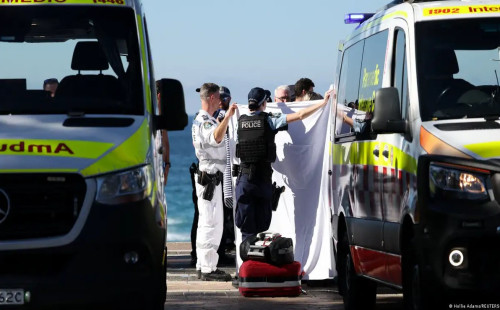
There, they were met by lifeguards,
police and medical experts, after which the woman was taken by ambulance to
hospital.
Australia has seen a spate of shark
attacks this year.
Most shark attacks occur along the
east and south-east seaboard of Australia, which averages around 20 such
incidents a year, according to the Australian Institute of Health and Welfare.