19 sectors may see cuts in AIT, source tax

Highlights:
- Govt may reduce
AIT, source tax rates for at least 19 business categories
- New, young and women
entrepreneurs expected to receive tax exemptions
- Major tax incentives
likely for electronics, mobile phones, renewables and EVs
- Healthcare sector may
receive significant tax breaks
- Businesses outside
Dhaka, Ctg may receive favourable depreciation benefits
- Ex-NBR chair says
measures could significantly boost investment if implemented properly
- NBR officials describe
upcoming budget as most business-, investment-friendly in country's
history
To create a more
investment-friendly environment and reduce the cost of doing business, the
government may lower advance income tax (AIT) at the import stage and source
tax rates at the local level for at least 19 categories of businesses.
At
the same time, tax exemptions are expected for new, young and women
entrepreneurs. Major tax breaks may also be offered to investors in the
electronics sector, including mobile phones, as well as renewable energy,
electric vehicle imports and local manufacturing.
Significant incentives are also expected for the
healthcare sector, according to sources at the National Board of Revenue (NBR).
NBR
officials said that the upcoming budget is attempting to address nearly all
major obstacles facing businesses and investors, alongside offering tax
incentives to encourage investment and economic activity.
Investors and experts have viewed the government's
initiatives positively.
According
to NBR officials, the withholding tax on export cash incentives may be reduced
by half, from the existing 10% to 5%, to encourage exports. Advance income tax
on imports of computer equipment and components may be reduced from 5% to 2%.
AIT on 22 categories of inputs used in local mobile phone manufacturing may be
cut to 1%.
A
10-year tax holiday may be introduced for edible oil producers using locally
produced oilseeds.
To
promote the recycling industry, the tax on the supply of raw materials for the
sector may be reduced from 3% to 1%.
To
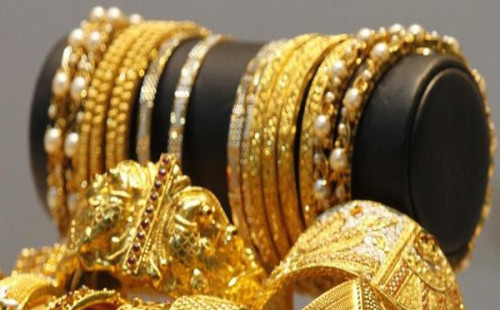
encourage gold and jewellery traders to come under the tax net, substantial
reductions in AIT on gold and ornaments may be offered. The existing tax on
imports of such products may be cut from 5% to 0.5%.
Amid
the ongoing energy crisis and uncertainty, the existing 5% AIT on imports of
electric vehicles and equipment for electric vehicle charging stations may be
withdrawn entirely. In addition, the registration fee for electric vehicles,
currently as high as Tk2 lakh, may be reduced by half.
The
withholding tax on fuel supplies by refineries may be reduced from 1.5% to 1%,
while the rate on mobile network services may fall from 12% to 10%. Tax on
packaging materials may be reduced from 5% to 3%.
Similarly,
withholding tax on transport, carrying and vehicle rental services may be
reduced from 5% to 2%.
The
government is also planning significant relief on imports of industrial raw
materials. In this case, the existing 5% AIT may be reduced to 4%, while the
same reduction may apply to local supplies. The withholding tax on machinery
supplied by non-residents may be cut by half from the current 15%. Withholding
tax on insurance premiums paid to non-residents may also be reduced by 50%.
Likewise,
withholding tax on interest payments for loans sourced offshore may be reduced
from 20% to 10%. Although the rate currently stands at 20%, the NBR has been
granting exemptions through special orders.
Major
tax breaks may also be introduced for renewable energy investments in the
upcoming budget. Income earned from such investments may be fully exempt from
tax until 2035. Tax rebates may also be available for users of solar-generated
electricity.
Several
legal barriers to investment may also be removed through the upcoming Finance
Bill. A mobile application may be introduced to simplify tax return
submissions. Taxpayers may be allowed to submit returns throughout the year,
while those filing within the prescribed deadline may receive a tax rebate equal
to 10% of the tax payable or Tk5,000, whichever is lower.
Currently,
if a company responsible for deducting withholding tax fails to do so, the
entire related expenditure may be disallowed and treated as a penalty. The new
proposal is expected to significantly reduce this burden.
The
allowable expense limits for companies may also be increased, helping reduce
the overall cost of doing business.
Time
limits may be set for resolving revenue-related cases more quickly. Conditions
for alternative dispute resolution may be relaxed to make the process faster
and easier. For the first time, a refund mechanism may be introduced for excess
taxes deducted from businesses and other taxpayers.
The
minimum tax system is also expected to be abolished, meaning excess taxes
deducted would be refunded.
Experts
say that if these initiatives are implemented properly, the effective tax rate
will decline. Investors argue that although the government has reduced
corporate tax rates over the past several years, the effective tax burden has
actually increased because of various conditions and complex tax structures.
Dr
Muhammad Abdul Mazid, former chairman of the NBR, told TBS, "If the
proposed reductions in AIT and withholding taxes, along with the removal of
other business barriers, are properly reflected in the budget and implemented
on the ground, they will provide significant support for business and
investment."
However,
he cautioned that if field-level activities of NBR officials do not align with
the government's policy direction, the expected benefits of these initiatives
may not be realised.
NBR
officials say the upcoming budget will be the most business- and
investment-friendly budget in the country's history.
Speaking
on condition of anonymity, a senior NBR official said, "The scale of tax
concessions and business facilitation measures being offered in this budget is
unprecedented. If businesses are not satisfied with these measures, it will be
difficult to satisfy them with anything else."
Initiatives for young and women
entrepreneurs
Income
earned by freelancers and content creators may be fully exempt from tax.
Annual
turnover of up to Tk50 lakh for small and medium enterprises (SMEs) may be
exempt from tax. For women entrepreneurs, the tax-free turnover threshold may be
increased to Tk70 lakh.
Startups,
innovation ventures and technology-based businesses may receive tax exemptions
for nine years.
In
addition, businesses and industries located outside Dhaka and Chattogram may
receive favourable depreciation treatment, resulting in lower tax liabilities.